
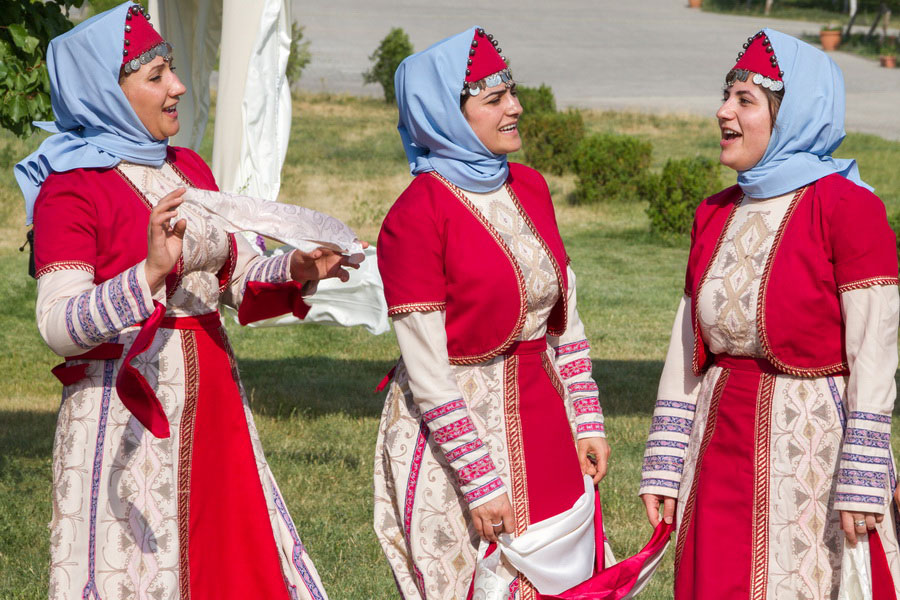
Armenian traditions developed over centuries as a reflection of the country’s position along the Great Silk Road, location in the rugged Caucasus Mountains and status as the first Christian nation in the world. Through their customs, the resolute Armenian people have managed to preserve their unique identity well into the 21st century.
Armenian Wedding Traditions
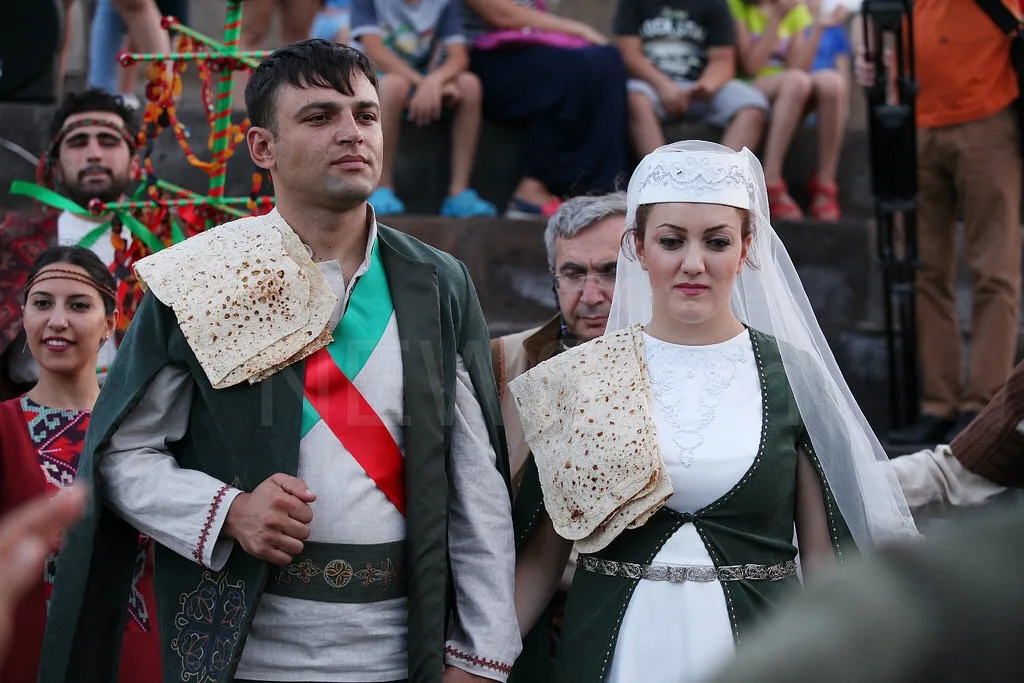
Armenian wedding traditions form the basis of one of the most important events in traditional Armenian communities.
The magic begins at the engagement party. After a couple has decided to get married, the groom’s family visits the bride’s family to ask for her hand in marriage. In olden times, the groom would be routinely rejected once or twice before the bride’s family finally said yes.
The wedding day itself starts early in the morning when the groom and his relatives go to the bride’s home with flowers, decorated fruit baskets, sweets, wine, Armenian brandy, shoes and perfume. Upon arrival, they are treated to a delicious feast.
According to one of the oldest wedding traditions in Armenia, the godparents of the groom must pay a ransom for the bride before he is allowed to see her. In another fun tradition still observed at weddings today, one of the bride’s shoes is stolen as she is getting dressed. After long negotiations and joyful bargaining, the shoe is returned to the young lady, often with money inside as a symbol of wealth.

The ceremony at the church is one of the most important Armenian wedding traditions and is followed by a celebration at the bride’s house or a restaurant. Before entering the building, however, the newlyweds must first break plates with their feet.
Armenian weddings are always punctuated with loud music and dancing. One of the most traditional parts of the celebration is a dance called sabbath. During the sabbath dance, guests gather around the bride and slip money into her hands while she dances, an interaction which symbolizes abundance in the newly formed family.
Among the more tangible weddings traditions in Armenia are the small souvenir boxes for guests, called tarosiki. The boxes symbolize love and are personally handed out to single guests by the bride and groom in order to wish their happiness upon the recipients. According to local belief, single girls who receive tarosiki can expect to see their future husband in a dream the following night.
During the wedding celebration, which continues late into the night, guests enjoy delicious food, music and dancing. They all take turns wishing the couple happiness through the recitation of colorful, poetic toasts, the most beloved of which is “May you grow old on one pillow!”
Mariam Shakhverdyan
Armenian Funeral traditions
Armenia is a country with a unique mentality, and Armenian traditions are full of pleasant and unexpected surprises. I really hope that many people will see this for themselves.
Funeral traditions in Armenia are rooted in ancient ideas about death and the afterlife. Many Armenians believe that the fate of every person is predetermined, and it is written in invisible ink on the foreheads of everyone who came to this world. In Armenia, this concept of fate is called «chakatagir». According to local beliefs, on the day of death, an angel descends from heaven to earth to take the soul, which leaves the body with the last breath of a person.
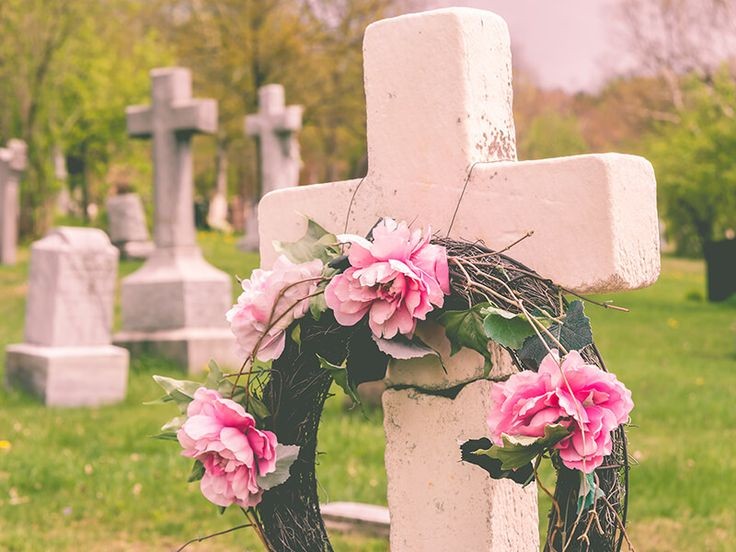
Armenian funeral traditions associated with avoiding contact with evil forces are still observed by many people. After death, the clock in the house is stopped, all the mirrors are covered with a cloth, and the hands of the deceased are tied. While the corpse is in the house, no one should wash clothes or work in the garden, as this may attract the attention of the Angel of Death. In addition, since it is considered unsafe to leave the coffin unattended until it has been taken out of the house, someone should sit next to it and ensure that the lit candle continues to burn at the head of the bed.
It is customary to put a coffin lid at the door of the house to inform neighbors and passersby about the death of a family member. In some ways, Armenian funeral rites resemble those of other Orthodox peoples. The priest invited to the house reads a prayer over the deceased and blesses the water for ablution. Before the funeral, which usually takes place on the third day after death, relatives and friends come to the house to say goodbye to the deceased.

According to Armenian funeral traditions, the coffin is wrapped three times counterclockwise, after which each member of the family kisses the hand of the deceased as a sign of respect. Shortly before taking the coffin out of the house, the men lower and raise it three times and hit it three times against the closed front door of the house. It is believed that the Apostle Peter, the «Guardian of the Gates of Heaven», will hear the knock and open the gates of heaven to the departed soul.
After the funeral, all the mourners visit the family of the deceased. Before entering the house, hands and shoes are washed with water or a damp towel. Traditionally, khashlama (stewed lamb with vegetables) and kurkut (wheat groats cooked with lamb or beef), as well as various sweets and fruits, are served at the table. The only alcoholic drinks allowed are vodka or cognac and should be consumed in moderation. Commemoration ceremonies are held on the third, seventh and fortieth days after death, as well as on the first anniversary.
Elen Abrahamyan
A Few Rites of the Ascension Day in Armenia
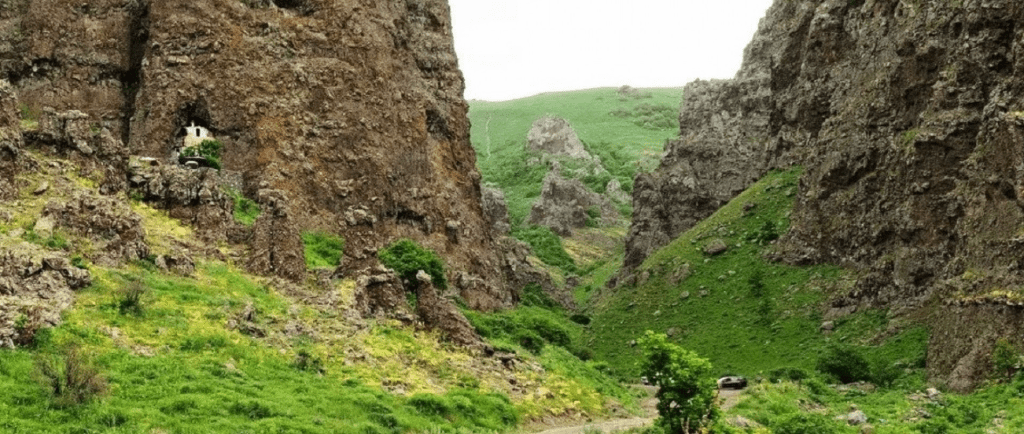
Exactly forty days after Easter, the Feast of the Ascension or, as it is called in many places, the Festival of Fortune or Milk Soup is celebrated. After Holy Resurrection or Easter, Christ walked on the earth for forty days and ascended to heaven on the fortieth day. Here is the Ascension Day in the Christian calendar, also called the Day of Fortune or Milk Soup in Armenia. Connected with Easter, Ascension is naturally a moving holiday, with different dates each year. However, it always falls on a Thursday and the festivities begin on Wednesday. On that Wednesday, women observed “Sunday of Tsaghkamayr”, avoiding certain works in honour of “Tsaghkamayr” so that she would keep their children free from “pox” and “measles” diseases. Tsaghkamayr, according to the tradition, is a virgin named Varvare, who was persecuted by her idolatrous father because of her conversion to Christianity, and she, fleeing from Western Armenia, came to Mount Ara near Ashtarak and hid in one of its caves. The father, following the girl’s footsteps, reached her, and the shepherds who were grazing sheep near the cave showed the place where the girl was hiding. Desperate Varvare, before being martyred, asked God that children with pox and measles be healed in her name. God granted her request, and the children of mothers praying to Varvare are freed from these diseases. At the same time, Varvare cursed the shepherds who betrayed him, and they were petrified with their sheep. To this day, the inhabitants of Ashtarak show those stones to people.
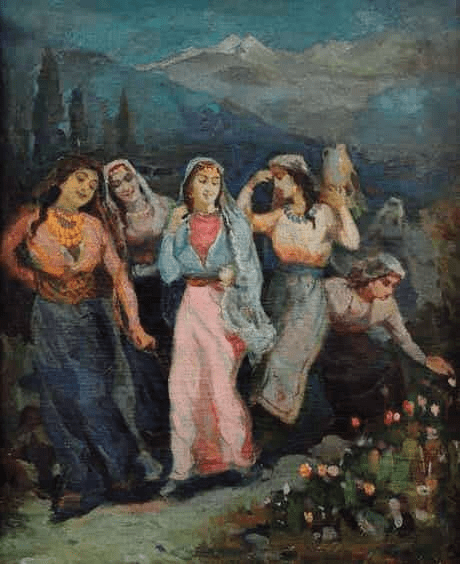
Early on Wednesday morning, preparations for the main rite (the fortune/fate) began, which is why the holiday was often called “Fortune/Fate”. Pre-selected groups of seven girls were going out to pick flowers. Despite the name “gathering/picking flowers”, in addition to flowers, they gathered in a basket seven handfuls of water from seven wellsprings, seven leaves from seven kinds of trees, seven kinds of flowers, and seven kinds of stones from a flowing stream. Ascension songs often referred to the seven wellsprings from which the girls took water, and the flowers they gathered.
In general, the girls went out in secret from everyone, before the rooster crowed, and remained speechless and silent until they had completed their mission. They avoided meeting men in particular, in some places when they met a man they even emptied the contents of the baskets and silently resumed their work. But there were deviations from this rule in some places. For example, in Shirak, flower picking was done during the day, accompanied by the whole community, the village, and with music. In Bassen, the girls sang Ascension songs during the flower gathering, and the boys accompanied them, singing along to the songs.
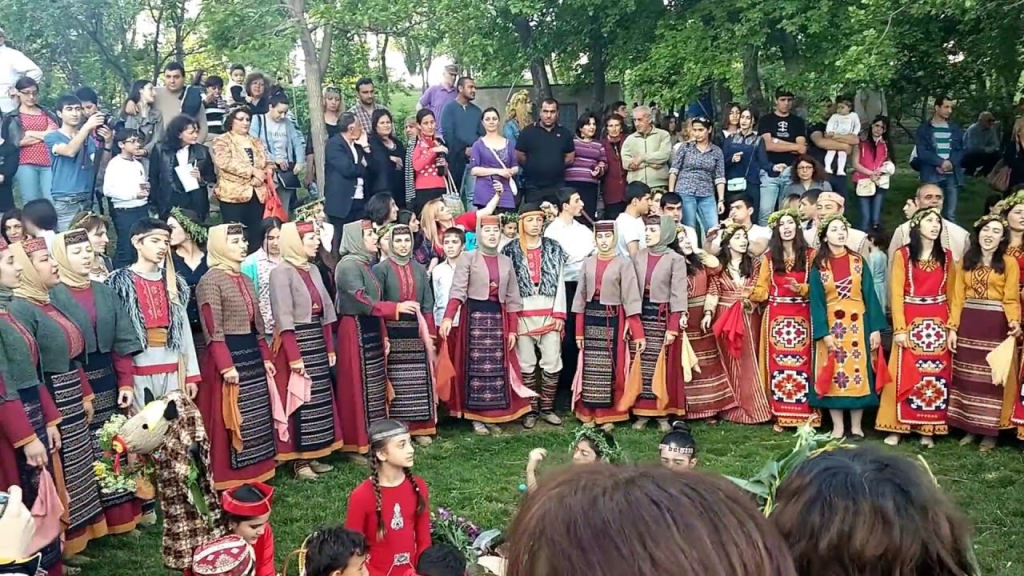
In addition to the flowers that were in the basket, many flowers were picked for decoration and Ascension bouquets. As soon as the collection of the necessary materials for the ritual garland was finished, the girls started talking to each other, singing, and throughout the process of decorating with flowers and making garlands, their songs were heard everywhere.
After dark, the girls would hide the basket in the grass and decorate around with bouquets of flowers. At night, the basket would remain in the open sky. “The stars will count,” to this day they say in Vardenis. That night, the girls put one egg on the roof so that the angels would write their fortunes on the eggs. When checking in the morning, those who found red marks on the egg were lucky, and those who found black marks were expected to be unlucky.
Anahit Abgaryan
Sources
 Մարիամ Շախվերդյան