
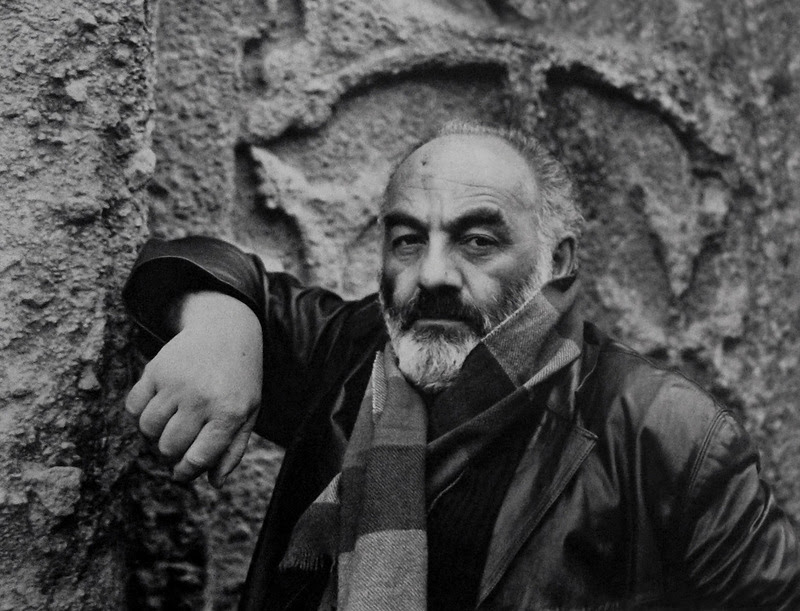
Biography
One of the 20th century’s greatest masters of cinema Sergei Parajanov was born in Georgia to Armenian parents and it was always unlikely that his work would conform to the strict socialist realism that Soviet authorities preferred. After studying film and music, Parajanov became an assistant director at the Dovzhenko studios in Kiev, making his directorial debut in 1954, following that with numerous shorts and features, all of which he subsequently dismissed as «garbage». However, in 1964 he was able to make Тени забытых предков (1965), a rhapsodic celebration of Ukrainian folk culture, and the world discovered a startling and idiosyncratic new talent. He followed this up with the even more innovative Цвет граната (1969) (which explored the art and poetry of his native Armenia in a series of stunningly beautiful tableaux), but by this stage the authorities had had enough, and Paradjanov spent most of the 1970s in prison on almost certainly rigged charges of «homosexuality and illegal trafficking in religious icons». However, with the coming of perestroika, he was able to make Легенда о Сурамской крепости (1985), Ашик-Кериб (1988) and The Confession, which survives as Параджанов: Последняя весна (1992), before succumbing to cancer in 1990.
— IMDb Mini Biography By: Michael Brooke <michael@everyman.demon.co.uk>
One of the 20th century’s greatest masters of cinema, Sergei Parajanov in the 1960s made two masterpieces in a row: Тени забытых предков (1965) and Цвет граната (1969). Both established him as a phenomenon with no analogy in the art world.
Parajanov was born on the January 9, 1924, in Tbilisi, Georgia, USSR, to an ethnic Armenian family. His father was Iosif Parajanian and his mother was Siranush Bejanian. In 1945 Parajanov traveled to Moscow and entered the directing department at VGIK, one of the oldest and most highly respected film schools in Europe, and studied under director Igor Savchenko and later Aleksandr Dovzhenko in Kiev, Ukraine. Parajanov moved to Kiev, where after a few documentaries (Думка (1957), Золотые руки (1957), Наталья Ужвий (1957)) and several narrative films (Андриеш (1954), Украинская рапсодия (1961), Цветок на камне (1962)) he created the magnificent «Shadows of Forgotten Ancestors», which won countless international awards, including the British Academy Award. The success of «Shadows of Forgotten Ancestors» was compared to that of the super influential Броненосец Потёмкин (1925); however, «Shadows of Forgotten Ancestors» didn’t conform to the standards of Soviet cinema and Parajanov was immediately blacklisted.
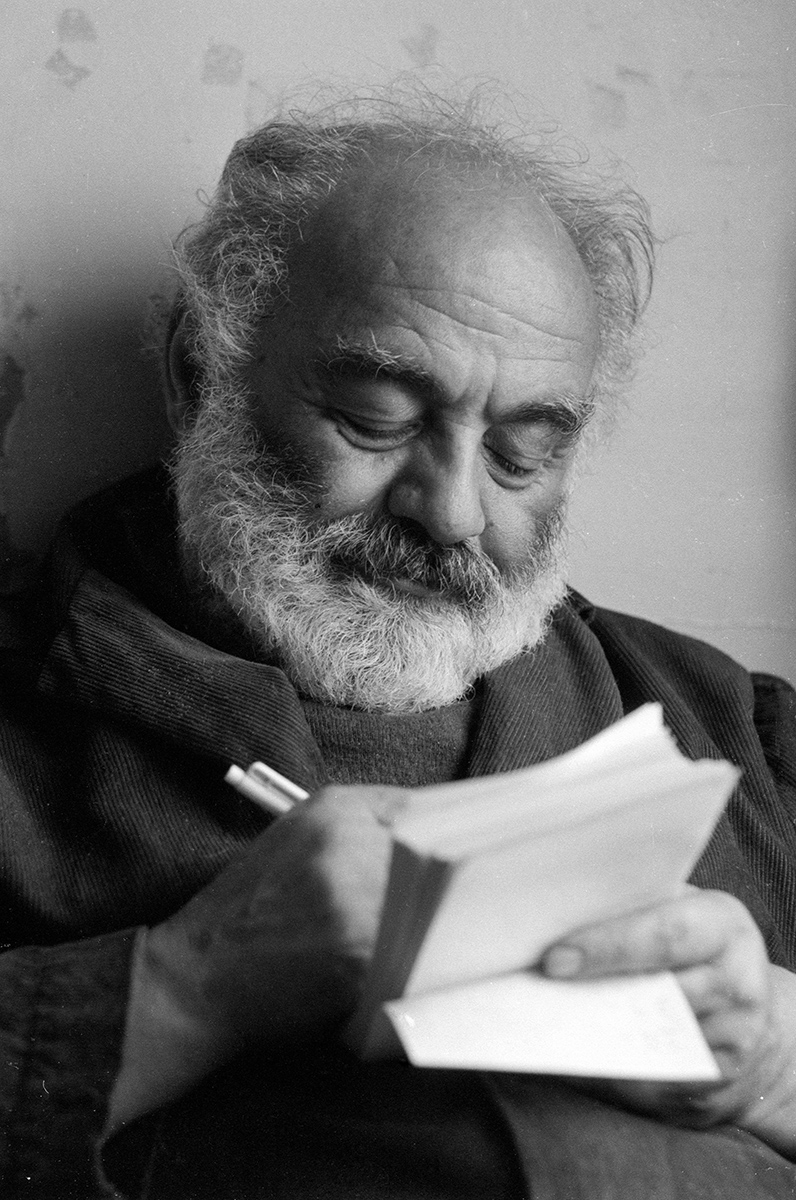
He left for Armenia to film the documentary Акоп Овнатанян (1967), and then in 1968 he created «Sayat Nova», his masterpiece. «Sayat Nova» was banned by Soviet authorities, re-edited and re-named «The Color of Pomegranate». In December of 1973, the Soviet government arrested Parajanov and sentenced him to five years in hard labor camps. A large group of world-famous artists, filmmakers and activists protested and Parajanov was released, but only after having served four horrific years in the Soviet penal system. Poet Louis Aragon’s petition to the Soviet government was instrumental in securing Parajanov’s release.
Parajanov returned to Tbilisi, but the regime continued to keep him away from cinema. During and after prison Paradjanov created extraordinary collages, drawings and numerous other art works, now frequently exhibited worldwide. In 1984, however, political conditions started to change and, with the help of Georgian intellectuals, the government allowed Parajanov to create the multi-award winning Легенда о Сурамской крепости (1985) 15 long years after «Sayat Nova».
In 1986 Parajanov made yet another multi-award winning film, Ашик-Кериб (1988), based on a tale by Mikhail Lermontov, and dedicated the film to his friend Andrei Tarkovsky. His stay in prison had crushed his health, however, and he passed away in July of 1990, leaving his final masterpiece «The Confession» unfinished. It survives in its original negative in Параджанов: Последняя весна (1992) by his closest friend Mikhail Vartanov.
Parajanov’s friends and and colleagues such as Federico Fellini, Tonino Guerra, Francesco Rosi, Alberto Moravia, Giulietta Masina, Marcello Mastroianni and Bernardo Bertolucci were among those who grieved his death, yet today Sergei Parajanov remains not very widely known. Few who saw «Shadows of Forgotten Ancestors» or «Color of Pomegranate» have not been forever influenced by the unseen beauty created by the genius.
 Մարիամ Շախվերդյան